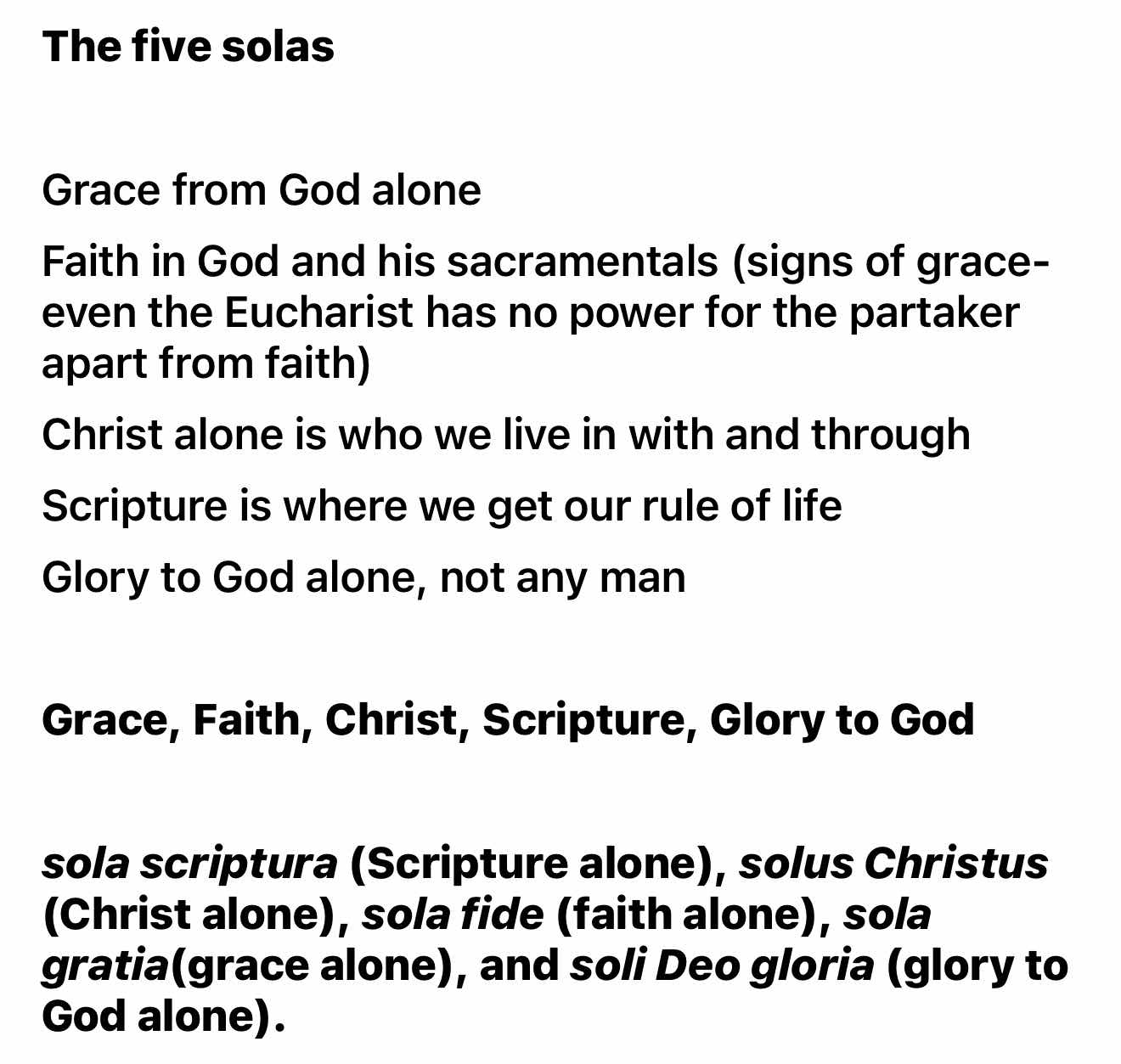
Whether God alone is the cause of grace?
It is impossible that any creature should cause grace. For it is as necessary that God alone should deify, bestowing a partaking of the Divine Nature
Whether any preparation and disposition for grace is required on man's part?
If we speak of grace as it signifies a help from God to move us to good, no preparation is required on man's part, that, as it were, anticipates the Divine help, but rather, every preparation in man must be by the help of God moving the soul to good. And thus even the good movement of the free-will, whereby anyone is prepared for receiving the gift of grace is an act of the free-will moved by God.
Whether grace is necessarily given to whoever prepares himself for it, or to whoever does what he can?
Man is compared to God as clay to the potter, Hence, however much a man prepares himself, he does not necessarily receive grace from God.
man's preparation for grace is from God, as Mover, and from the free-will, as moved. From God the Mover, and thus it has a necessity—not indeed of coercion, but of infallibility—as regards what it is ordained to by God, since God's intention cannot fail, that "by God's good gifts whoever is liberated, is most certainly liberated." Hence if God intends, while moving, that the one whose heart He moves should attain to grace, he will infallibly attain to it, according to John 6:45: "Every one that hath heard of the Father, and hath learned, cometh to Me.
Whether grace is greater in one than in another?
Sanctifying grace cannot be greater or less, since, of its nature, grace joins man to the Highest Good, which is God.
But as regards the subject, grace can receive more or less, inasmuch as one may be more perfectly enlightened by grace than another. And a certain reason for this is on the part of him who prepares himself for grace; since he who is better prepared for grace, receives more grace. Yet it is not here that we must seek the first cause of this diversity, since man prepares himself, only inasmuch as his free-will is prepared by God. Hence the first cause of this diversity is to be sought on the part of the God, Who dispenses His gifts of grace variously, in order that the beauty and perfection of the Church may result from these various degree; even as He instituted the various conditions of things, that the universe might be perfect. Hence after the Apostle had said (Ephesians 4:7): "To every one of us is given grace according to the measure of the giving of Christ," having enumerated the various graces, he adds (Ephesians 4:12): "For the perfecting of the saints. . . for the edifying of the body of Christ."
Whether man can know that he has grace?
Three ways:
first, by revelation, and thus anyone may know that he has grace, for God by a special privilege reveals this at times to some, in order that the joy of safety may begin in them even in this life, and that they may carry on toilsome works with greater trust and greater energy, and may bear the evils of this present life, as when it was said to Paul (2 Corinthians 12:9): "My grace is sufficient for thee."
Second, the principle of grace and its object is God, Who by reason of His very excellence is unknown to us, according to Job 36:26: "Behold God is great, exceeding our knowledge." And hence His presence in us and His absence cannot be known with certainty." And hence man cannot judge with certainty that he has grace, according to 1 Corinthians 4:3-4: "But neither do I judge my own self . . . but He that judgeth me is the Lord."
Third, by signs; and thus anyone may know he has grace, when he is conscious of delighting in God, and of despising worldly things, and inasmuch as a man is not conscious of any mortal sin.
Whether the justification of the ungodly is the remission of sins?
implies a certain rectitude of order in the interior disposition of a man, in so far as what is highest in man is subject to God, and the inferior powers of the soul are subject to the superior, i.e. to the reason
the justification of the ungodly, according to the Apostle (Romans 4:5): "But to him that worketh not, yet believeth in Him that justifieth the ungodly," etc. And because movement is named after its term "whereto" rather than from its term "whence," the transmutation whereby anyone is changed by the remission of sins from the state of ungodliness to the state of justice
Whether the infusion of grace is required for the remission of guilt, i.e. for the justification of the ungodly?
by sinning a man offends God. Now an offense is remitted to anyone, only when the soul of the offender is at peace with the offended. Hence sin is remitted to us, when God is at peace with us, and this peace consists in the love whereby God loves us. Now God's love, considered on the part of the Divine act, is eternal and unchangeable; whereas, as regards the effect it imprints on us, it is sometimes interrupted, inasmuch as we sometimes fall short of it and once more require it. Now the effect of the Divine love in us, which is taken away by sin, is grace, whereby a man is made worthy of eternal life, from which sin shuts him out. Hence we could not conceive the remission of guilt, without the infusion of grace.
Whether for the justification of the ungodly is required a movement of the free-will?
He moves man to justice according to the condition of his human nature. But it is man's proper nature to have free-will. Hence in him who has the use of reason, God's motion to justice does not take place without a movement of the free-will; but He so infuses the gift of justifying grace that at the same time He moves the free-will to accept the gift of grace, in such as are capable of being moved thus.
Whether for the justification of the ungodly there is required a movement of the free-will towards sin?
the justification of the ungodly is a certain movement whereby the human mind is moved by God from the state of sin to the state of justice. Hence the human mind whilst it is being justified, must, by a movement of its free-will withdraw from sin and draw near to justice.
Whether the remission of sins ought to be reckoned amongst the things required for justification?
justification of the ungodly is a movement whereby the soul is moved by God from a state of sin to a state of justice. Now in the movement whereby one thing is moved by another, three things are required: first, the motion of the mover; secondly, the movement of the moved; thirdly, the consummation of the movement, or the attainment of the end. On the part of the Divine motion, there is the infusion of grace; on the part of the free-will which is moved, there are two movements—of departure (from sin) from the term "whence," and of approach (justice) to the term "whereto"; but the consummation of the movement or the attainment of the end of the movement is implied in the remission of sins; for in this is the justification of the ungodly completed.
Whether the justification of the ungodly takes place in an instant or successively?
The entire justification of the ungodly consists as to its origin in the infusion of grace. For it is by grace that free-will is moved and sin is remitted. Now the infusion of grace takes place in an instant and without succession.
that God, in order to infuse grace into the soul, needs no disposition, save what He Himself has made. And sometimes this sufficient disposition for the reception of grace He makes suddenly, sometimes gradually and successively. Therefore, since the Divine power is infinite, it can suddenly dispose any matter whatsoever to its form; and much more man's free-will, whose movement is by nature instantaneous. Therefore the justification of the ungodly by God takes place in an instant.
Whether the infusion of grace is naturally the first of the things required for the justification of the ungodly?
The aforesaid four things required for the justification of the ungodly are simultaneous in time, since the justification of the ungodly is not successive; but in the order of nature, one is prior to another; and in their natural order the first is the infusion of grace; the second, the free-will's movement towards God; the third, the free-will's movement towards sin; the fourth, the remission of sin.
Now the motion of God the Mover is the infusion of grace, as stated above; the movement or disposition of the moved is the free-will's double movement; and the term or end of the movement is the remission of sin, as stated above (Article 6). Hence in their natural order the first in the justification of the ungodly is the infusion of grace; the second is the free-will's movement towards God; the third is the free-will's movement towards sin, for he who is being justified detests sin because it is against God, and thus the free-will's movement towards God naturally precedes the free-will's movement towards sin, since it is its cause and reason; the fourth and last is the remission of sin, to which this transmutation is ordained as to an end.
Whether the justification of the ungodly is God's greatest work?
for a just man to be made from a sinner is greater than to create heaven and earth," adds, "for heaven and earth shall pass away, but the justification of the ungodly shall endure.
Whether the justification of the ungodly is a miraculous work?
the justification of the ungodly and the creation of the world, and, generally speaking, every work that can be done by God alone, is miraculous.
the justification of the ungodly is sometimes miraculous and sometimes not. For the common and wonted course of justification is that God moves the soul interiorly and that man is converted to God, first by an imperfect conversion, that it may afterwards become perfect; because "charity begun merits increase, and when increased merits perfection," as Augustine says (In Epist. Joan. Tract. v). Yet Godsometimes moves the soul so vehemently that it reaches the perfection of justiceat once, as took place in the conversion of Paul, which was accompanied at the same time by a miraculous external prostration. Hence the conversion of Paul is commemorated in the Church as miraculous.