Saturday, November 30, 2019

Take up the cross. 

As long as we are on earth, 

suffering will never be wanting; 

it will be found even 

in the highest states of divine union, 

for we must always be conformed 

to Jesus crucified, 

and follow him even 

to complete immolation 

for the glory of the Father 

and the salvation of our brethren.


Forgetting ourself completely, 

the loving soul thinks neither 

of enjoying nor of suffering,

but only of loving and serving God, 

of contributing as much as it can 

to his glory by associating itself 

to the redemptive work of Jesus.


Never be deceived into believing that our continual failures will disqualify us from the journey of Divine Union. God judges us by how best we try no matter how many times we fall, for only he knows the power of our personal demons and how best we have tried to overcome them. The very essence of this journey is in endlessly getting up no matter how many times we fall. It is in this, more than anything else, that the real quality of our love is measured. Even if we do not have a pure and humble heart to begin with, a pure and humble heart will be God’s gift for those who persevere in following their heart’s desire, come what may.


The most pernicious stumbling block to our spiritual advancement is the pride that follows our fall, which induces us to pack up and run away from God rather than face the truth of our sinfulness. The difference between the saint and the sinner is not that they never fail and we do, but the speed with which they seek forgiveness and begin again immediately no matter how many times they fall. This takes great humility and is how true humility is learned.  


If you have the humility to keep trying to practice the repentance that involves repeatedly turning, opening and offering your heart to God, he cannot fail you because he is God. His infinite loving will always triumph, even over our endless finite failures. It is only the pride and the pomposity of those who do not have the humility to keep getting up after falling, that can keep God out and prevent him leading us through the darkness of purification into the light of his love. The Devil is the personification of Pride and the only power that can thwart God’s plan permanently. 


The inner emptying that finally enables us to surrender our true self, freed from the demons within. It is this utter and complete surrendering of ourselves that finally enables the Holy Spirit, who has been guiding us throughout, to draw us up ever more fully into the Mystical Body of Christ. 


Wednesday, November 27, 2019

We were not present at the Last Supper, the Crucifixion, or the Resurrection, but we are nonetheless invited to be there. God is outside of time, and at Holy Mass we enter into His once-forall sacrifice. We do not repeat it; rather, we participate in the Paschal Mystery. We are there.


During Mass, we are in the upper room at the Last Supper; we are at Calvary, the focal point of salvation history; we are peering into the empty tomb; and we are walking unknowingly with the hidden Jesus and the disciples on their way to Emmaus. 


Jesus said, “And behold, I am with you always, until the end of the age” (Matt. 28:20), and yet we know that He ascended to the Father, so how can this be? At Mass, our Lord is available to us in Holy Communion. We receive His Body, Blood, Soul, and Divinity, His presence, His “divine DNA.” 


The Church teaches: There is no surer pledge or clearer sign of this great hope in the new heavens and new earth “in which righteousness dwells,” than the Eucharist. Every time this mystery is celebrated, “the work of our redemption is carried on” (2 Pet. 3:13) and we “break the one bread that provides the medicine of immortality, the antidote for death, and the food that makes us live forever in Jesus Christ.”


Our participation in the Holy Sacrifice of the Mass and our reception of the Eucharist opens heaven to us and renders Satan impotent.


Tuesday, November 26, 2019

Christ insisted that true disciples would be distinguished by their willingness to carry the cross. Though God originally offered paradise, Adam and Eve’s (our) rejection of it and insistence upon living in Paradise Lost, means that the Lord must insist upon the cross (suffering) as the only remedy for our salvation.


Yes, to follow Christ involves suffering and rejection. It also involves stricter observance, which postpones certain passing pleasures in order to inherit lasting ones, which rejects apparent goods in order to receive true goods.


Jesus said, Anyone who does not take up his cross and follow Me is not worthy of Me (Matt 10:38). Whoever wants to be my disciple must deny himself and take up his cross and follow me (Matt 16:24). St. Paul said, … we preach Christ crucified, a stumbling block to Jews and foolishness to Gentiles, but to those who are called, both Jews and Greeks, Christ the power of God and the wisdom of God (1 Cor 1:23-25). He also lamented, For, as I have often told you before and now tell you again even with tears, many live as enemies of the cross of Christ. Their destiny is destruction, their god is their stomach, and their glory is in their shame. Their mind is set on earthly things (Phil 3:18-19).


Suffering is not meaningless. It brings wisdom, humility, perspective, strength, and trust. It reminds us of the passing quality of this world and prepares us to meet God.


Sunday, November 24, 2019


POSTED ON

King of Thieves and King of the Universe – A Homily for the Solemnity of Christ the King

Jesus Christ is King of Thieves, though He never stole. He is savior of sinners, though He never sinned.

Today’s Gospel chosen presents Jesus as reigning from the cross. Nothing could be more paradoxical. Let’s look at it from four perspectives:

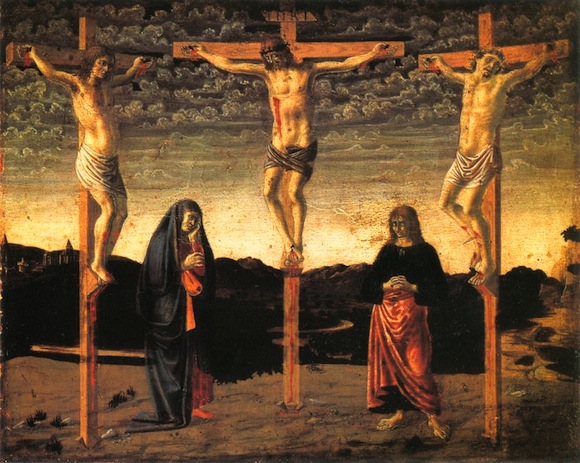
Vision –Today’s Gospel presents a vision or image of the Church.We like to think of more pleasant images: the Church is the Bride of Christ or the Body of Christ. Today’s image is more humbling to be sure: the Church is Christ, crucified between two thieves.

Yes, this is the Church too. In a way, we are all thieves.We are all sinners and have used the gifts and things that belong to God in a way contrary to His will. To misuse things that belong to others is a form of theft.

Consider some of the things we claim as our own and how easily we misuse them:our bodies, our time, our talents, our money, the gift of our speech, and the gift of our freedom. We call them ours but they really belong to God, and if we use them in ways contrary to His intention we are guilty of a form of theft.

Variance –Consider, also, that the two thieves were very different. In the Church we have saints and sinners, and in the world there are those who will turn to Christ and be saved and others who will turn away and be lost.

One thief (the “bad thief”) derides Jesus and makes demands of Him.Are you not the Christ? Save yourself and us!The text says that this thief “reviles” Jesus, treating him with contempt.

The other thief (the “good thief”)reverences Christ and rebukes the other, saying,Have you no fear of God?The good thief recognizes his guilt: We have been condemned justly. He asks, Jesus remember me when you come into your kingdom, but he leaves the terms of it up to Christ. He acknowledges that he is a thief and now places his life under the authority of Christ the King.

Christ came to call sinners—thieves, if you will.Yes, we are all thieves, but pray God that we are the good thief, the repentant thief, the thief who is now ready to submit himself to the authority of Christ, who is King of all creation.

Heaven is a real steal, something we don’t deserve; it is only accessed through repentance and faith. The bad thief wants relief but will not open the door of his heart so that Jesus can save him. Mercy is offered and available to him, but it is accessed only through repentance and faith. The good thief does open the door of his heart and thereby is saved.

III. Veracity –Is Christ really your king?A King has authority, so another way of posing this question is, “Does Christ have authority in your life?” Consider whether you acknowledge that everything you call your own really belongs to God and think about how well you use those gifts.

      1. How do you use our time?
      2. Are you committed to pray and to attend Mass every Sunday without fail?
      3. Do you use enough of your time to serve God and others, or merely for selfish pursuits?
      4. Do you use the gift of your speech to witness and evangelize, or merely for small talk and gossip?
      5. Do you exhibit proper care for your body?
      6. Are you chaste?
      7. Do you observe proper safety or are you sometimes reckless?
      8. Do you reverence life?
      9. Are you faithful to the Lord’s command to tithe?
      10. Do you spend wisely?
      11. Do you pay your debts in a timely way?
      12. Are you generous enough to the poor and needy?
      13. Do you love the poor and help them to sustain their lives?

It is one thing to call Christ our King, but it is another to be truly under His authority. The Lord is clear enough in telling us that he expects our obedience: Why do you call me, “Lord, Lord,” but do not do what I tell you? (Luke 6:46)

Is Christ your King? Which thief are you, really?

Victory –The thief who asked Jesus to remember him manifested repentance, faith, and a kind of baptism of desire. In so doing, he moved into the victor’s column. Jesus’s words, Today you shall be with me in paradise,indicate a dramatic shift in the thief’s fortunes.

To be with Jesus—wherever He is—is paradise and victory. Soon enough, the heavens will be opened, but the victory is now and paradise begins now.

Thus the good thief claims the victory through his choice for Jesus Christ. Will you have the victory? That depends on whether you choose the prince of this world or the King of the Universe, Jesus. Some think that they can tread some middle path, choosing neither Jesus nor Satan. But if you do that, you’ve actually chosen the prince of this world, who loves compromise. Jesus says, Whoever is not with me is against me, and whoever does not gather with me scatters(Matt 12:30).

As for me, I’ve decided to make Jesus my choice. I pray that he will truly be my King in all things and that my choice will be more than mere lip service. Come, Jesus, reign in my heart. Let me begin to experience victory and paradise, even now!

Friday, November 22, 2019

Jesus’ call to conversion and penance, like that of the prophets before him, does not aim first at outward works, “sackcloth and ashes,” fasting and mortification, but at the conversion of the heart, interior conversion. 


Without this, such penances remain sterile and false; however, interior conversion urges expression in visible signs, gestures and works of penance. 


Interior repentance is a radical reorientation of our whole life, a return, a conversion to God with all our heart, an end of sin, a turning away from evil, with repugnance toward the evil actions we have committed. 


At the same time it entails the desire and resolution to change one’s life, with hope in God’s mercy and trust in the help of his grace. This conversion of heart is accompanied by a salutary pain and sadness which the Fathers called animi cruciatus (affliction of spirit) and compunctio cordis (repentance of heart). 


The human heart is heavy and hardened. God must give man a new heart. Conversion is first of all a work of the grace of God who makes our hearts return to him: “Restore us to thyself, O Lord, that we may be restored!” God gives us the strength to begin anew. It is in discovering the greatness of God’s love that our heart is shaken by the horror and weight of sin and begins to fear offending God by sin and being separated from him. 


The human heart is converted by looking upon him whom our sins have pierced: 

Let us fix our eyes on Christ’s blood and understand how precious it is to his Father, for, poured out for our salvation, it has brought to the whole world the grace of repentance.


Why Hell is Eternal and Other Teachings on Hell

This is the thirteenth and final installment in a series on the Four Last Things: Death, Judgment, Heaven and Hell.

The teachings of the Lord on Hell are difficult, especially in today’s climate. The most difficult questions that arise relate to its eternal nature and how to square its existence with a God who is loving and rich in mercy. As a closing reflection on Hell and on the Four Last Things, let us ponder a series of questions.

1. Does God love the souls in Hell? Yes.

How could they continue to exist if He did not love them, sustain them, and continue to provide for them? God loves because He islove. Although we may fail to be able to experience or accept His love, God loves every being He has made, human or angelic.

The souls in Hell may have refused to empty their arms to receive His embrace, but God has not withdrawn His love for them. He permits those who have rejected Him to live apart from him. God honors their freedom to say no, even respecting it when it becomes permanent, as it has for fallen angels and the souls in Hell.

God is not tormenting the damned. The fire and other miseries are largely expressions of the sad condition of those who have rejected the one thing for which they were made: to be caught up into the love and perfection of God and the joy of all the saints.

2. Is there any good at all in Hell? Yes. Are all the damned punished equally? No.

While Heaven is perfection and pure goodness, Hell is not pure evil. The reason for this is that evil is the privation or absence of something good that should be there. If goodness were completely absent, there would be nothing there. Therefore, there must be some goodness in Hell or there would be nothing at all. St. Thomas Aquinas teaches,

It is impossible for evil to be pure and without the admixture of good …. [So]those who will be thrust into hell will not be free from all good … those who are in hell can receive the reward of their goods, in so far as their past goods avail for the mitigation of their punishment(Summa Theologica, Supplement 69.7, reply ad 9).

This can assist us in understanding that God’s punishments are just and that the damned are neither devoid of all good nor lacking in any experience of good. Even though a soul does not wish to dwell in God’s Kingdom (evidenced by rejection of God or the values of His Kingdom), the nature of suffering in Hell is commensurate with the sin(s) that caused exclusion from Heaven.

This would seem to be true even of demons. In the Rite of Exorcism, the exorcist warns the possessing demons, “The longer you delay your departure, the worse your punishment shall be.” This suggest levels of punishment in Hell based on the degree of unrepented wickedness.

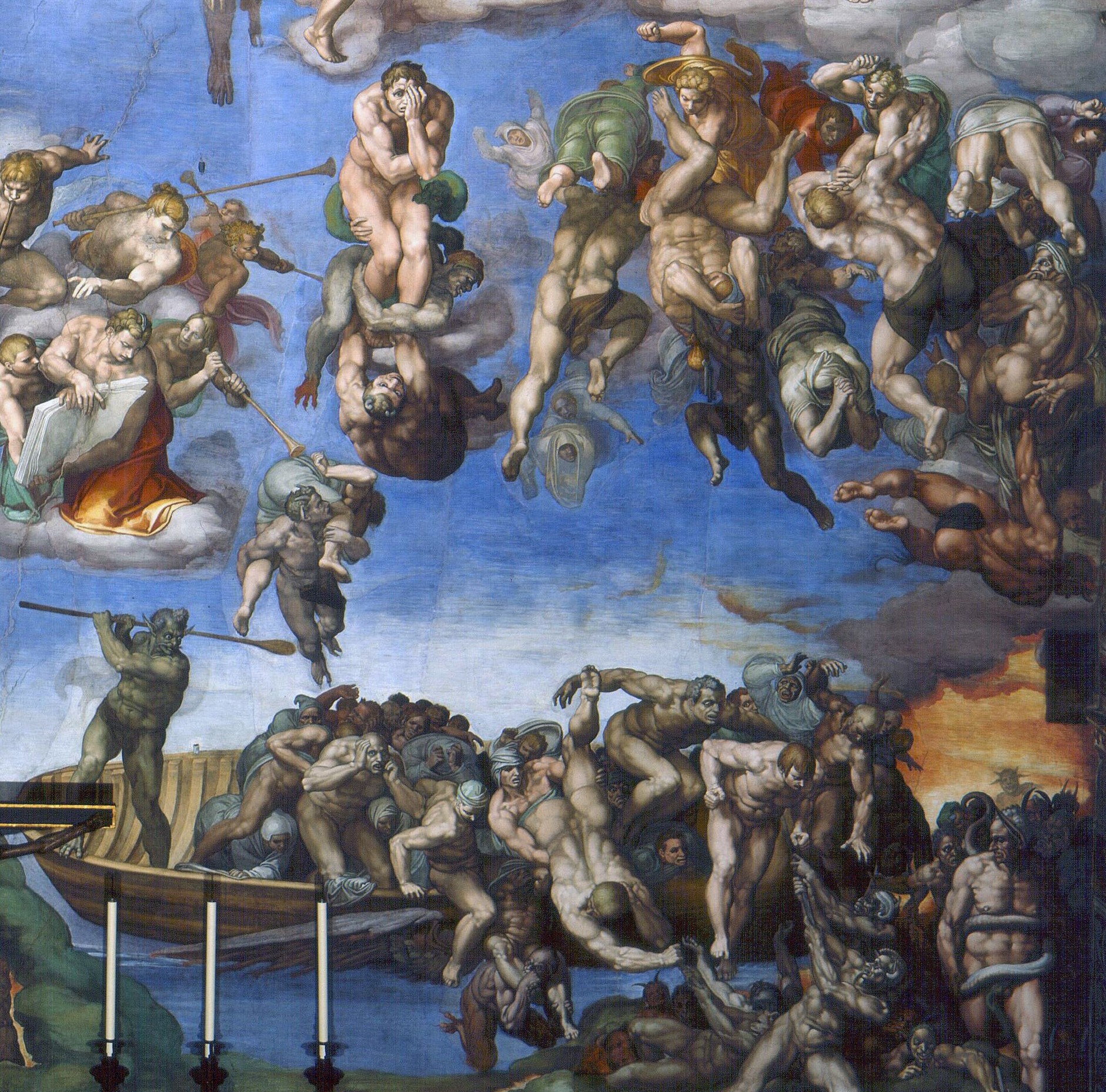
In his Inferno, Dante described levels within Hell and wrote that not all the damned experience identical sufferings. Thus, an unrepentant adulterer might not experience the same suffering in kind or degree as would a genocidal, atheistic head of state responsible for the death of millions. Both have rejected key values of the Kingdom: one rejected chastity, the other rejected the worship due to God and the sacredness of human life. The magnitude of those sins is very different and so would be the consequences.

Heaven is a place of absolute perfection, a work accomplished by God for those who say yes. Hell, though a place of great evil, is not one of absolute evil. It cannot be, because God continues to sustain human and angelic beings in existence there and existence itself is good. God also judges them according to their deeds (Rom 2:6). Their good deeds may ameliorate their sufferings. This, too, is good and allows for good in varying degrees there. Hell is not in any way pleasant, but it is not equally bad for all. Thus God’s justice, which is good, reaches even Hell.

3. Do the souls in Hell repent of what they have done? No, not directly.

After death, repentance in the formal sense is not possible. However, St. Thomas makes an important distinction. He says,

A person may repent of sin in two ways: in one way directly, in another way indirectly. He repents of a sin directly who hates sin as such: and he repents indirectly who hates it on account of something connected with it, for instance punishment or something of that kind. Accordingly, the wicked will not repent of their sins directly, because consent in the malice of sin will remain in them; but they will repent indirectly, inasmuch as they will suffer from the punishment inflicted on them for sin (Summa Theologica, Supplement, q 98, art 2).

This explains the “wailing and grinding of teeth” in so far as it points to the lament of the damned. They do not lament their choice to sin without repenting, but for the consequences. In the Parable of Lazarus, the rich man in Hell laments his suffering but expresses no regret over the way he treated the beggar Lazarus. Indeed, he still sees Lazarus as a kind of errand-boy, who should fetch him water and warn his brothers. In a certain sense the rich man cannot repent; his character is now quickened and his choices forever fixed.

4. Is eternal punishment just? Yes.

Many who might otherwise accept God’s punishment of sinners are still dismayed that Hell is eternal. Why should one be punished eternally for sins committed over a brief time span, perhaps in just a moment? The punishment does not seem to fit the crime.

This logic presumes that the eternal nature of Hell is intrinsic to the punishment, but it is not. Rather, Hell is eternal because repentance is no longer available after death. Our decision for or against God and the values of His Kingdom values becomes forever fixed. Because at this point the will is fixed and obstinate, the repentance that unlocks mercy will never be forthcoming.

St. Thomas teaches,

[A]s Damascene says (De Fide Orth. ii) “death is to men what their fall was to the angels.” Now after their fall the angels could not be restored [Cf. I:64:2]. Therefore, neither can man after death: and thus the punishment of the damned will have no end. … [So] just as the demons are obstinate in wickedness and therefore have to be punished for ever, so too are the souls of men who die without charity, since “death is to men what their fall was to the angels,” as Damascene says(Summa Theologica, Supplement, q 99, art 3).

5. Do the souls in Hell hate God? No, not directly.

St. Thomas teaches,

The appetite is moved by good or evil apprehended. Now God is apprehended in two ways, namely in Himself, as by the blessed, who see Him in His essence; and in His effects, as by us and by the damned. Since, then, He is goodness by His essence, He cannot in Himself be displeasing to any will; wherefore whoever sees Him in His essence cannot hate Him. 

On the other hand, some of His effects are displeasing to the will in so far as they are opposed to any one: and accordingly a person may hate God not in Himself, but by reason of His effects. Therefore, the damned, perceiving God in His punishment, which is the effect of His justice, hate Him, even as they hate the punishment inflicted on them (Summa Theologica, Supplement, q 98, art 5).

6. Do the souls in hell wish they were dead? No.

It is impossible to detest what is fundamentally good, and to exist is fundamentally good. Those who say that they “wish they were dead” do not really wish nonexistence upon themselves. Rather, they wish an end to their suffering. So it is with the souls in Hell. St. Thomas teaches,

Not to be may be considered in two ways. First, in itself, and thus it can nowise be desirable, since it has no aspect of good, but is pure privation of good. Secondly, it may be considered as a relief from a painful life or from some unhappiness: and thus “not to be” takes on the aspect of good, since “to lack an evil is a kind of good” as the Philosopher says (Ethic. v, 1). In this way it is better for the damned not to be than to be unhappy. Hence it is said (Matthew 26:24): “It were better for him, if that man had not been born,” and (Jeremiah 20:14): “Cursed be the day wherein I was born,” where a gloss of Jerome observes: “It is better not to be than to be evilly.” In this sense the damned can prefer “not to be” according to their deliberate reason (Summa Theologica, Supplement, q 98, art 3).

7. Do the souls in Hell see the blessed in Heaven?

Some biblical texts say that the damned see the saints in glory. For example, the rich man in the parable can see Lazarus in the Bosom of Abraham (Lk 16:3). Further, Jesus says, There will be weeping and gnashing of teeth when you see Abraham, Isaac, Jacob, and all the prophets in the kingdom of God, but you yourselves are thrown out (Lk 13:28). However, St Thomas makes a distinction:

The damned, before the judgment day, will see the blessed in glory, in such a way as to know, not what that glory is like, but only that they are in a state of glory that surpasses all thought. This will trouble them, both because they will, through envy, grieve for their happiness, and because they have forfeited that glory. Hence it is written (Wisdom 5:2) concerning the wicked: “Seeing it” they “shall be troubled with terrible fear.”

After the judgment day, however, they will be altogether deprived of seeing the blessed: nor will this lessen their punishment, but will increase it; because they will bear in remembrance the glory of the blessed which they saw at or before the judgment: and this will torment them. Moreover, they will be tormented by finding themselves deemed unworthy even to see the glory which the saints merit to have (Summa Theologica, Supplement, q 98, art 9).

St Thomas does not cite a Scripture for this conclusion. However, certain texts about the Last Judgment emphasize a kind of definitive separation. For example, in Matthew 25 we read this: All the nations will be gathered before [the Son of Man], and he will separate the people one from another as a shepherd separates the sheep from the goats. … Then they will go away to eternal punishment, but the righteous to eternal life (Mat 25:32, 46).

Clearly, Hell is a tragic and eternal separation from God. Repentance, which unlocks mercy, is available to us; but after death, like clay pottery placed in the kiln, our decision is forever fixed.

Choose the Lord today! Judgment day looms. Now is the time to admit our sins humbly and to seek the Lord’s mercy. There is simply nothing more foolish than defiance and an obstinate refusal to repent. At some point, our hardened hearts will reach a state in which there is no turning back. To die in such a condition is to close the door of our heart on God forever.

READ 3  There shall no more be anything accursed, but the throne of God and of the Lamb shall be in it, and his servants shall worship him;...