HOW I AM SAVED
God wants all to be saved.
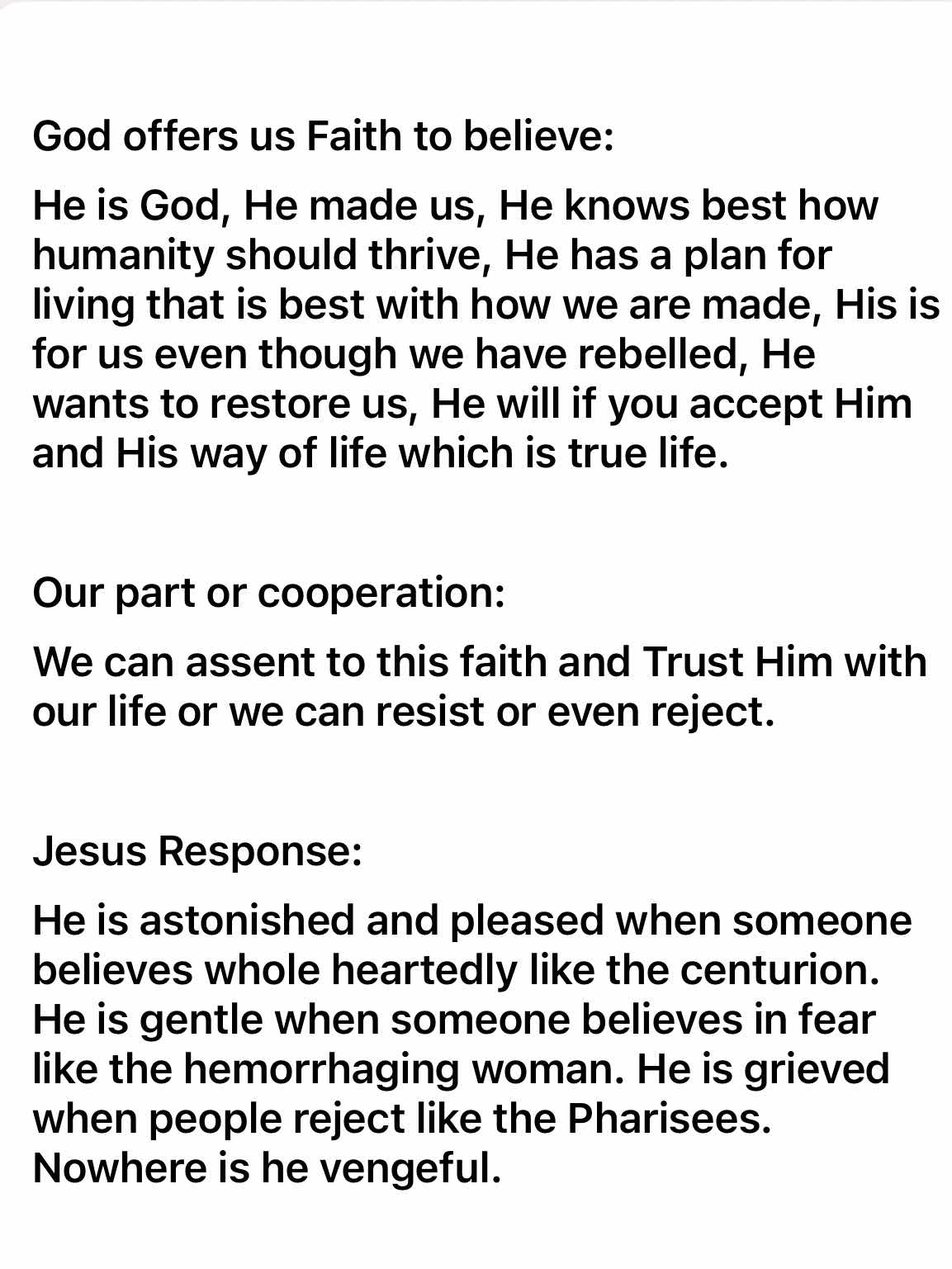
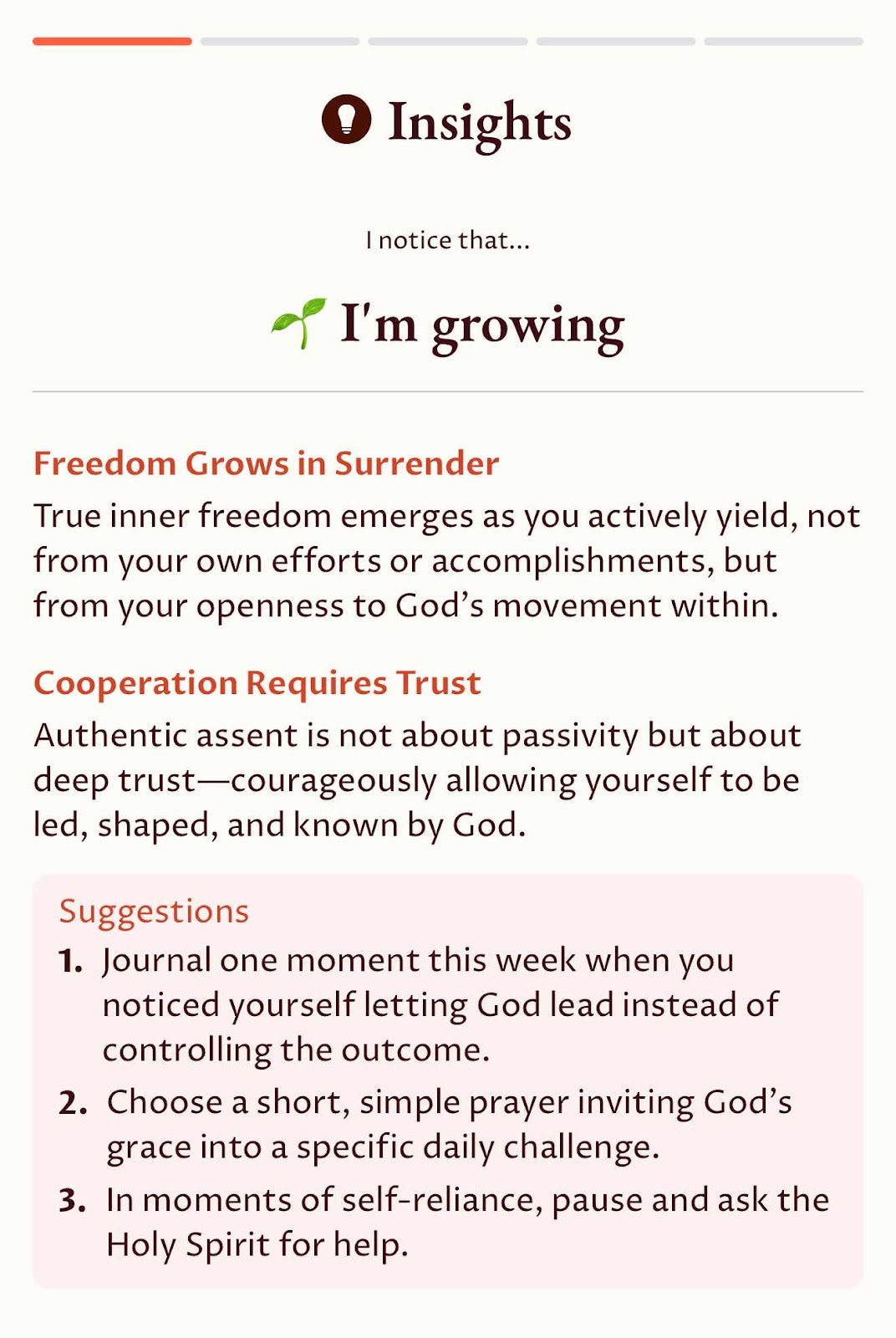
We have to assent to love him back
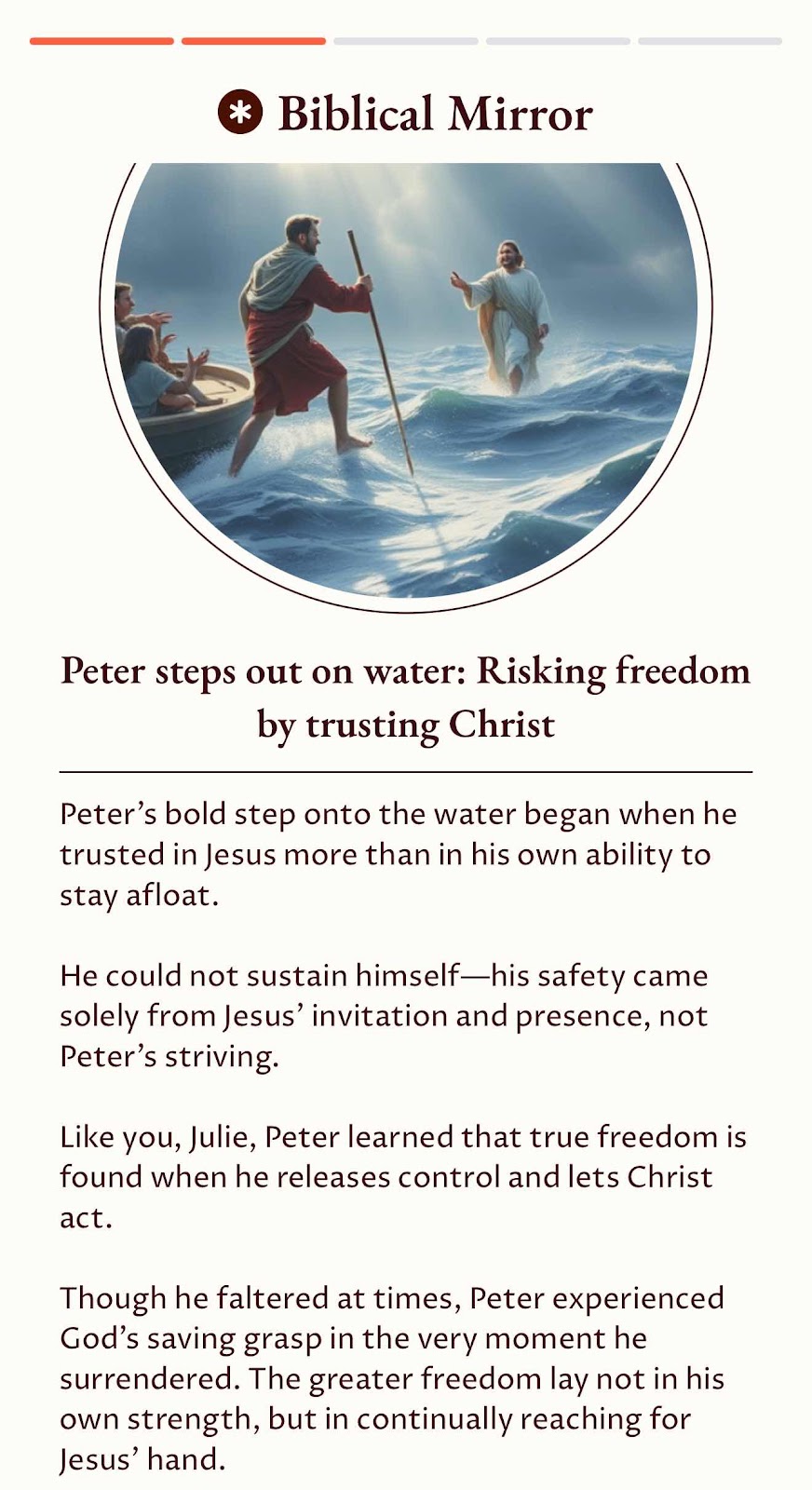
My part is faith and trust in assenting to GRACE by FAITH (not work – that is fruit/proof)
His will for me [God has a plan for me specifically – I don’t want him to say I never knew you] (not what any man/church) God wants me for HIMSELF.
Cooperation and Transformative Grace
- Grace is a gift from God that initiates positive to not sin, and/or salvation.
- Humans must assent to grace — meaning they freely cooperate with it.
- This cooperation is not a work that earns grace, but a response enabled by grace itself.
- Monergism (GRACE) then Synergy (ASSENT/RESIST): God acts first, and humans respond.
- This view supports the idea of ongoing sanctification/justification BY GRACE, through FAITH, Sacraments, assent to good works God destined me for, and spiritual growth, In CHRIST.
- When grace is given, it changes the person (if assented to) enabling faith and repentance.
- Good works and spiritual growth are results of grace, not conditions for receiving it.
GRACE
ALL MEN FALL SHORT OF THE GLORY OF GOD and need GRACE and FAITH to save.
From childhood through life there is common actual grace (Providential restraint and blessing)
common grace is a real, positive work of God: general benevolence that gives grace to all humanity—believers and unbelievers alike.
- Preserves the world from total corruption
- Enables civil society and culture to function
- Allows unbelievers to do relatively good things
Grace is there to not sin and choose right (in conscience, society, culture, provision of good, and positive work from God etc)
If people choose right with common grace it’s easier to keep choosing Grace given to do right. Grace is daisy chained, the more we choose right, the more we get….
Some keep choosing right leading to hearing the call to salvation. Then choose to completely give their life to Christ Or choose to walk the fence and be lost.
Some who are dark in sin, have a strong conversion like a light from God which leads to complete turn around and completely give their life to Christ, Or reject and be lost.
If choose wrong it darkens the heart and mind and enslaves to sin….we may or may not be offered more grace, depends on what God’s plan is.
God wants all men to be saved and choose life.
This grace can lead people to recognize God’s goodness, truth, and moral law. It includes things like conscience, natural law, and the desire for truth and goodness. This is often referred to as actual grace—a temporary help from God to do good and avoid evil. If a person responds positively to this grace, seeking truth and doing good as best they can, God may offer further grace—what you called efficient grace (more commonly called sanctifying).
Common grace can be the beginning of a journey toward salvation. If they respond faithfully, God may offer sanctifying grace, which brings about salvation—always through Christ, even if implicitly.
We can do right/wrong but not because we love God, but because we are choosing what we love.
God is the highest love and that is to be chosen before all. (salvation is being in God) The church affirmed the biblical doctrine of original sin, the teaching that we’re born sinful, and only God’s grace can change us (Rom. 3:23; Eph. 2:1–3) However, He offers at minimum common grace to everyone – He takes care of everyone (even the birds) but man does not want to give glory to Him for what He does, they want everything their way. His ways are not ours. We have to take the life he gave as his gift and give thanks for all we have.
Our “best” means nothing to a holy God. We’re saved by grace alone.
We need God’s grace. Without God’s help, we’d never turn to him. But we need to cooperate with that grace which means to give free assent to His work in us with a FIAT – YES GOD I WANT TO LOVE YOU BACK, CHANGE MY HEART. God draws us by his grace, but we still have free will. We’re free to resist the grace of God. (predestination says that God equips those chosen to freely accept-not all get this grace and even those that get it can technically resist and reject).But all do get common grace to grow if they choose. We are responsible for our responses. We choose heaven or hell based on our responses. God owes no one salvation.
Paul told the Ephesian church, “You were dead in your trespasses and sins” (Eph. 2:1). Dead people can’t cooperate with God’s grace. The dead can’t do anything. We cannot even pray to be saved because we are dead and do not know we are not saved. But God opens hearts and we can say yes or no, and our actions determine our heart and its soil. Actual grace is always in the world to keep us from sin, which can enlighten our minds to God’s efficient grace call.Only those given supernatural grace are able to be saved. We are born to go to hell and God enables some to heaven.
FAITH
By faith, we entrust ourselves to Christ and his work.Faith unites us to Christ and the grace he gives. It’s not a good deed. It doesn’t earn us God’s favor. It isn’t “our part” in salvation. Faith is just the means by which the Holy Spirit brings us to Christ. Faith is primarily trust.
Our faith, then, is the work of God’s grace. It’s given by God: “For by grace you have been saved through faith. And this is not your own doing; it is the gift of God, not a result of works, so that no one may boast” (Eph. 2:8–9). Faith unites us eternally to Christ. We’re saved by grace alone through faith alone.
True faith always changes a person. The Holy Spirit who gives sinners new life and faith in Christ can’t fail to transform them. It isn’t possible for someone with true faith not to do works of love.
Justification begins with God's grace. Humans must freely assent to this grace FIAT. Good works are done in grace by faith, are part of the process of growing in righteousness—not earning salvation, but living it out (proof/fruit not reason/earn).
Free assent is a key part of what the Catholic Church means by "cooperation with grace."
Ongoing Cooperation
After the initial assent, we continue to cooperate and freely assent to grace through:
Faith (trust in God), Hope and love, Good works (done in grace), assent and the ongoing response to God’s work, and Participation in the sacraments.
JUSTIFICATION
Christ lived a perfect life and died a sinner’s death so that God could judge sinners righteous. In other words, there’s an exchange. If we’re united to Christ by faith, then Christ’s perfect life is our life, and our hideous life became his (2 Cor. 5:21). When God looks at us, he sees Christ’s righteousness and not our sin.
This is the doctrine of justification by faith alone. We’re justified through our faith, which unites us to Christ’s life and death. Nothing that we do—even good works that the Holy Spirit works in us—helps to justify us. God declares us righteous based on Christ’s life and death.
But what exactly is justification? It’s a judgment. When someone accuses you of a crime, you defend yourself before a judge or jury. After hearing the case, the court issues a judgment. You’ll either be justified or condemned. You’re either innocent or guilty.
If we’re justified, it means God has issued his judgment. We’re declared righteous in his courtroom. Why? Because he judged our sin on the cross, and Christ fulfilled the law in our place. For the Christian, then, the last judgment has already happened. God says we’re righteous, even though we’re still sinners and have done nothing to earn eternal life. We’re justified first, and then a life of love follows.
WORKS
Faith leads to a new way of life, a life of love. Our good works matter. Good works matter because they show our gratitude to God for saving us. Our good lives glorify God, show that we love Him, that we’re Christians, and make the gospel attractive to others. But our salvation doesn’t depend on them. However, without them, our faith can die. (faith without works is dead faith-you will be pruned/punished for the sake of coming back) If choose wrong it darkens the heart and mind and enslaves to sin….we may or may not be offered more grace, depends on what God’s plan is.
SANCTIFICATION
To sanctify something is to separate it from other things for a holy purpose. Through sanctification, God sets Christians aside as his holy people. We’re holy, and our holiness grows as we’re purified by the Holy Spirit over time. And our sanctification and justification isn’t complete until we’re in heaven. As we walk in Him, we are justified and being sanctified.
Through justification, God accepts us. Through sanctification, God makes us holy. Justification never exists without sanctification, but it always comes first.
Sanctification, like justification, is by grace alone. God, in his grace, renews us so that we desire to obey him through the work of the Holy Spirit. Our whole salvation, both justification and sanctification, is the work of God’s grace alone. We do still have choice to assent or not.
SALVATION
“What must I do to be saved?”
The apostle Paul answered the Philippian jailer by saying, “Believe in the Lord Jesus, and you will be saved, you and your household” (Acts 16:31). We’re saved by faith in Jesus. Since Jesus did everything, we believe we can be assured of our salvation. We can know that we belong to God. If our faith is in Christ, we can be sure that we’ll live in joy and glory with God forever.
THE WORD-HOW GOD SPEAKS
We stake everything on the truth and power of God’s word.
All Christians believe that the word of God is more than the biblical text. The Bible begins by showing that God’s word created everything: “God said, ‘Let there be light,’ and there was light” (Gen. 1:3). Each act of creation in Genesis 1 is described as speech: “And God said.” God’s word, then, isn’t just God’s way of communicating—it’s his creative power.
The creation still speaks. It tells us about God’s holiness and glory: “The heavens declare the glory of God, and the sky above proclaims his handiwork. Day to day pours out speech, and night to night reveals knowledge” (Ps. 19:1–2). When we look at the sky, God tells us about himself.
But creation doesn’t tell us about God’s grace. It doesn’t make known his plan of salvation. That’s only revealed in human words.
Above all, though, God’s Word is Jesus Christ. The apostle John wrote, “And the Word became flesh and dwelt among us, and we have seen his glory, glory as of the only Son from the Father, full of grace and truth” (John 1:14). The Bible also says that Jesus is God’s final word to us: “Long ago, at many times and in many ways, God spoke to our fathers by the prophets, but in these last days he has spoken to us by his Son, whom he has appointed the heir of all things, through whom he also created the world” (Heb. 1:1–2). Jesus, the eternal Son of God, was the Word that created the world. When he became a man, he became the last prophet, and God’s ultimate message of grace.
The whole counsel of God, concerning all things necessary for his own glory, man’s salvation, faith, and life, is either expressly set down in Scripture, or by good and necessary consequence may be deduced from Scripture: unto which nothing at any time is to be added, whether by new revelations of the Spirit, or traditions of men.
“All things necessary” for the church to know come from the Bible. Nothing can be added to it. No one receives new revelations from God. And no inspired traditions stand alongside Scripture.
BIBLE MEANING
But if the Bible alone teaches the truth about Christ, how can we be sure what it really means?
Thousands of different churches today claim to be biblical. And these churches seem to offer a thousand different interpretations of the Bible. If you read the Bible on your own, it likely hasn’t taken long for you to get to passages that make you say, “What in the world does that mean?”
The Bible itself talks about the way it can be misunderstood. The apostle Peter wrote this about the letters of Paul: “There are some things in them that are hard to understand, which the ignorant and unstable twist to their own destruction, as they do the other Scriptures” (2 Pet. 3:16). Not only can it be hard to understand Scripture, misunderstanding it brings great danger. It can lead to “destruction.”
All things in Scripture are not alike plain in themselves, nor alike clear unto all; yet those things which are necessary to be known, believed, and observed for salvation, are so clearly propounded and opened in some place of Scripture or other, that not only the learned, but the unlearned, in a due use of the ordinary means, may attain unto a sufficient understanding of them.
A true, saving knowledge of God’s word comes only through the Holy Spirit. When Peter talked about those who misunderstood Paul’s writing, he didn’t say they just weren’t sharp enough. He said they “twist” the Scriptures. In their sin, they willfully distort the Bible’s meaning. Our ability to understand Scripture depends on the state of our hearts.
The gospel is “the power of God for salvation” (Rom. 1:16) because God acts through his word to create new life out of spiritual darkness. Christians can understand God’s word, because God himself gives believers understanding. God himself makes his word clear to his people through the Holy Spirit.
TRADITION
The church does have a tradition, a rich, powerful, and necessary tradition. In fact, it’s a catholic tradition. Rather than an institution in Rome led by the pope, the true catholic church “consists of all those throughout the world that profess the true religion.” The catholic church includes those in all times and places who have lived by the apostles’ testimony in the Scriptures.
But this catholic tradition isn’t infallible. It isn’t inspired directly by Holy Spirit. It’s not God’s word. Instead, it’s a record of the church’s efforts to understand and teach God’s word. And sometimes the church’s teachers have gotten things wrong.
Catholics broke from this catholic tradition. The Catholic Church, Protestants believe, placed its own authority above the authority of God’s word. It had gradually added more and more rules and practices that led people to trust the Church instead of the word.
“The Supreme Judge, by which all controversies of religion are to be determined . . . can be no other but the Holy Spirit speaking in Scripture.” The final authority is the Bible alone.
Sinners are saved by grace alone through faith alone in Christ alone, they made their case from the Bible alone.
WHO RUNS THE CHURCH
“Who rules the church—Christ alone or a man who rules on Christ’s behalf?”
The church today has the apostles’ testimony in the New Testament. These biblical writings include everything that the Holy Spirit inspired the apostles to write (John 16:13). These writings carry apostolic authority. They teach and guide the church. And the role of the church’s leaders isn’t to add to these writings, the role of church leaders is to teach them faithfully through the presence and power of the Holy Spirit.
He said, “I will give you the keys to the kingdom of heaven, and whatever you bind on earth shall be bound in heaven, and whatever you loose on earth shall be loosed in heaven” (Matt. 16:19). These “keys to the kingdom” gave the apostles—and the church leaders who have come after them—the power to do two main things. They preach the gospel, which opens the doors to the kingdom to sinners. They also carry out church discipline. This closes the doors to those who refuse to repent of their sins and receive God’s mercy.
Christ, the king of the church, calls Christians to an absolute loyalty to him. This means that Christ doesn’t want human beings to claim the power that belongs to the king alone. He doesn’t want Christians to have “an absolute and blind obedience” to any human leader: “God alone is Lord of the conscience, and hath left it free from the doctrines and commandments of men which are in anything contrary to his word; or beside it, if matters of faith, or worship.” The power of the institutional church is limited in strict and clear ways. The church is ruled ultimately by Christ through his word.
Pastors and elders are God’s gifts to his people. The Bible says that Christ “gave the apostles, the prophets, the evangelists, the shepherds and teachers, to equip the saints for the work of ministry, for building up the body of Christ” (Eph. 4:11–12). For that reason, Christians must honor and obey their leaders (Heb. 13:17). But church leaders aren’t infallible or inspired. They aren’t more holy or exalted than other members of the church. They’re simply called to a specific post, and they’re accountable to the king for how they do their job.
New Testament teaches that Jesus Christ is the final, perfect, and eternal priest (Heb. 10:11–14). By sacrificing himself on the cross, he made the final sacrifice for sins. No more sacrifices are necessary. Jesus still acts as a priest by praying for his church at the right hand of God the Father in heaven (Heb. 7:25).
SACRAMENTS
“Sacraments are holy signs and seals of the covenant of grace, immediately instituted by God, to represent Christ and his benefits, and to confirm our interest in him.” This means two things:
Sacraments are instituted explicitly by God. Forexample, Jesus established the sacrament of the Eucharist when he said, “Do this in remembrance of me” (Luke 22:19).
Sacraments signify God’s grace to sinners. They’re pictures of the gospel. They also seal Christians with God’s gospel promises—they confirm that those who receive the sacraments by faith have been made part of Christ’s kingdom.
The power of the sacraments depends on the work of the Holy Spirit and “the word of institution.” Only as the Holy Spirit acts and the word of God expresses the promises of the gospel do the sacraments affect people.
The sacraments only give grace to “worthy partakers.” This means that only those with faith in God’s gospel promises receive the grace offered in the sacraments.Those without faith in Christ who receive the sacraments don’t benefit from the grace offered.
Baptism
Jesus formally instituted baptism when he gave his disciples the Great Commission: “All authority in heaven and on earth has been given to me. Go therefore and make disciples of all nations, baptizing them in the name of the Father and of the Son and of the Holy Spirit, teaching them to observe all that I have commanded you” (Matt. 28:18–20). As the disciples brought the good news of the gospel to the world, they would also bring baptism.
Baptism signifies death and resurrection: the new life we have in Christ (Rom. 6:3–4). It’s the sacrament that marks a person’s entry into Christ’s church. Jesus said everyone who believed in him needed to be baptized. One can be saved and reborn without baptism and, on the other hand, everyone who is baptized is not therefore unquestionably reborn.”
Baptism is “a sign and seal of . . . regeneration.”Baptism is a sign of a person’s new birth. And it seals God’s promises of grace to those who are born again. The water doesn’t give someone new life. And the Holy Spirit doesn’t necessarily save a person from spiritual death in his moment of baptism. The Holy Spirit gives new life by enabling sinners to put their faith in the gospel when they hear it. Usually, for those who become Christians as adults, they are born again before baptism. For baptized infants, their new life in Christ may happen sometime after their baptism.
Eucharist
Jesus instituted the Lord’s Supper, or communion, on the night before he died:
Now as they were eating, Jesus took bread, and after blessing it broke it and gave it to the disciples, and said, “Take, eat; this is my body.” And he took a cup, and when he had given thanks he gave it to them, saying, “Drink of it, all of you, for this is my blood of the covenant, which is poured out for many for the forgiveness of sins.” (Matt. 26:26–28)
Jesus told his disciples that the bread and the wine signified something: his body and blood. On the cross, the next day, his body, like the bread, would be broken. And he told them his blood would be shed for “the forgiveness of sins.” The bread and wine in communion, therefore, signify Jesus’s sacrificial death for us.
Jesus is spiritually present in the Eucharist. The Holy Spirit brings Jesus and all the promises of the gospel to those who eat and drink in faith. This spiritually nourishes believers.
“Worthy receivers, outwardly partaking of the visible elements in this sacrament, do then also inwardly by faith, really and indeed, carnally and corporally, and spiritually, receive and feed upon Christ crucified, and all the benefits of his death.” In Eucharist, Christians truly “receive and feed upon Christ crucified.”
Jesus sacrificed himself once and for all on the cross:
In this sacrament, Christ is not offered up to his Father, nor any real sacrifice made at all for remission of sin of the quick or dead; but only a commemoration of that one offering up of himself, by himself, upon the cross, once for all; and a spiritual oblation of all possible praise unto God for the same (re-presentation) Christ has one and only one sacrifice, the alone propitiation for all the sins of his elect.
The Letter to the Hebrews, in particular, emphasizes that Christ’s sacrifice on the cross is the final sacrifice for sin. And it’s complete: “When Christ had offered for all time a single sacrifice for sins, he sat down at the right hand of God” (Heb. 1:12). Jesus finished offering himself, and then ascended to his Father in heaven. Christ’s work of justifying us before God is finished. The Holy Spirit applies Jesus’s saving work to us now, but the sacrifice has already been made. Nothing can be added to it. Jesus’s life, death, and resurrection are enough. We’re saved by Christ alone.
WORSHIP (sacraments or word)
Jesus alone is king of his church, and he rules it through his word.
Many Protestants thought that the sacraments were the main way the Catholic Church exercised its power. Rather than performing the two biblical sacraments, baptism and communion, the church created acomplex system of sacraments that replaced the Bible for most Christians. People didn’t look for God’s grace in the message of the gospel; they looked for it in sacraments. They looked for grace especially in the Eucharist, which for Catholics is the center of Christian worship.
As long as the church, through its sacraments and sacramental priesthood, was the storehouse of God’s grace, Catholics needed to rely on the church instead of the Bible. Instead of the gospel of God’s free grace through Christ’s completed sacrifice for sin, people needed to keep coming to the church for more and more grace through the sacraments. The sacramental system was a manmade form of salvation that kept people from the truth.
The sacraments are a means of grace. They make God’s people more holy. But they only do this in the lives of those who have put their faith in Christ’s finished sacrifice. For those who believe in the gospel of grace alone, the sacraments grow their faith in Christ. But their faith is in the salvation Christ has already accomplished through his life, death, and resurrection.